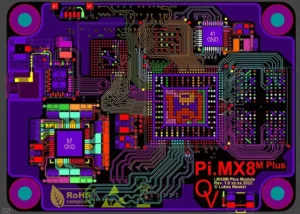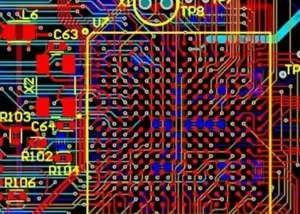
With the rapid development of electronic products toward miniaturization, high performance, and high reliability, High-Density Interconnect (HDI) printed circuit boards have become a key enabling technology in advanced electronic packaging.
Compared with traditional multilayer PCBs, HDI boards feature higher wiring density, smaller via structures, thinner substrates, and superior electrical performance.
However, the increased integration level and finer structural features also introduce significant challenges in manufacturing processes such as drilling, copper plating, and fine-line etching.
These challenges directly affect product consistency, reliability, and production yield.
Therefore, systematic analysis of common manufacturing issues and the development of targeted optimization strategies are essential for improving HDI circuit board quality and meeting the growing demands of modern electronics.
Overview of High-Density Interconnect (HDI) Circuit Board Manufacturing Processes
Definition of HDI Circuit Boards
High-Density Interconnect (HDI) printed circuit boards differ from traditional printed circuit boards in three key aspects:
① HDI boards feature higher wiring density than conventional multilayer boards;
② HDI boards utilize smaller via and blind via apertures than traditional multilayer boards;
③ HDI PCBs are thinner than conventional multilayer boards.
In recent years, market demand for HDI PCBs has maintained rapid growth.
They enable electrical interconnection between layers via through-holes, blind vias, and buried vias.
The introduction of blind and buried vias significantly reduces the number of layers required in multilayer boards, enhances board utilization, and lowers manufacturing costs.
Their high board utilization and shorter trace routing provide HDI boards with superior electrical performance and signal integrity compared to traditional boards, making them more suitable for electronic packaging processes.
HDI Circuit Board Manufacturing Process Flow
The HDI circuit board manufacturing process is relatively complex, primarily encompassing substrate selection, drilling, copper plating, circuit formation, solder resist application, and character printing.
Substrate selection is the initial step, followed by cleaning treatment.
Based on actual requirements, mechanical drilling or laser drilling technology is employed to create microvia holes, precisely controlling hole diameter and depth.
Subsequently, copper plating is applied through chemical or electroplating methods, uniformly depositing copper layers on hole walls and substrate surfaces to establish electrical pathways for stable current conduction.
Circuit pattern formation employs photolithography and etching techniques to transfer the designed circuit layout onto the substrate while removing excess copper foil.
Next, solder mask printing is performed, applying a protective layer to the board surface.
This effectively prevents unintended solder contact during assembly, avoiding circuit short-circuits.
Character printing is used to mark relevant circuit board information, facilitating subsequent assembly, inspection, and maintenance operations.
Finally, multi-dimensional quality inspections are conducted to ensure product compliance.
Testing includes visual inspection, flying probe testing, X-ray inspection, and more.
Issues and Experimental Methods in HDI Circuit Board Manufacturing Processes
Inadequate Drilling Precision
In actual production, high hole wall roughness is a common issue with HDI circuit boards.
Taking laser cutting drilling as an example, friction between the high-speed rotating drill bit and substrate material generates heat.
If cooling measures are inadequate, localized overheating can cause the hole wall material to melt, resulting in an uneven surface after cooling.
Experiments demonstrate that laser power, frequency, processing speed, and Z-axis height significantly impact drilling quality.
Taking processing speed as an example, its effect on drilling quality was investigated while other parameters remained constant.
With laser power set at 8 W, frequency at 50 kHz, Z-axis height at 0.2 mm, and spot diameter at 0.02 mm, processing speeds were sequentially set to 130, 140, 150, 160, and 170 mm/s.
Cutting quality was observed using a metallographic microscope and laser blind hole detector. Statistical results are shown in Table 1.
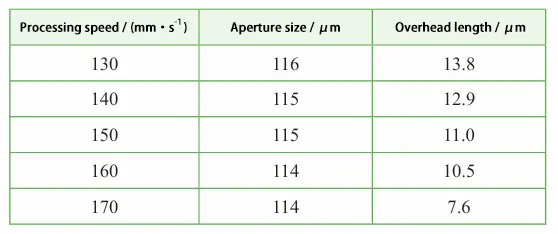
As shown in Table 1, the higher the processing rate, the smaller the through-hole diameter.
An increased processing rate shortens the dwell time of each laser pulse on the epoxy resin glass fiber cloth substrate.
This reduced exposure time diminishes the laser energy absorbed by the substrate, consequently weakening the thermal effect.
The diminished thermal effect reduces the laser’s etching depth on the substrate, manifesting as narrower via rings and slightly smaller apertures.
During production, aperture deviations significantly impact subsequent processes and circuit board performance.
Poor Copper Plating Uniformity
Controlling copper plating uniformity in high aspect ratio vias is one of the challenges in HDI board production.
Uneven copper plating leads to product consistency deviations, severely impacting electronic equipment performance.
Cross-sectional analysis of a 7.5:1 aspect ratio via revealed that the copper thickness at the via center was only 55%–65% of the surface thickness, while the via opening exhibited over 40% greater copper thickness than the center.
This uneven plating distribution cross-section analysis of a 7.5:1 aspect ratio via revealed that the copper thickness at the via center was only 55%–65% of the surface copper thickness, while the copper thickness at the via opening was over 40% thicker than at the center.
This uneven plating distribution leads to non-uniform current density distribution, which can cause electrochemical migration under high-temperature and high-humidity conditions, shortening product lifespan.
Experiments demonstrate that after 8 hours of continuous electroplating operation, the copper ion concentration in the plating solution decreases by 15%–20%, while the effective components of additives degrade by over 30%.
These changes directly impact coating quality, increasing coating brittleness.
Tensile tests reveal that coatings obtained from depleted baths exhibit reduced ductility—dropping from 8% to less than 3%—and a tensile strength decrease exceeding 20%.
Additionally, current density significantly impacts copper plating uniformity.
At 1.8 A/dm², surface deposition rates reach 25 μm/h, whereas pore deposition rates remain only 12 μm/h, demonstrating a marked disparity.
This disparity intensifies with prolonged plating duration.
25 μm/h, while the deposition rate within the holes is only 12 μm/h, a significant difference.
This disparity in deposition rates intensifies as plating time increases, ultimately leading to insufficient copper thickness within the holes and severely compromising product consistency.
Insufficient Etching Precision During Circuit Line Fabrication
The core process of HDI circuit boards is the fabrication of fine circuits.
Taking the production of 25 μm line widths as an example, when using traditional subtractive methods to fabricate 25 μm line widths, the actual line width deviation reaches ±7 μm, with approximately 18% of lines deviating by more than ±10 μm.
SEM analysis reveals that side etching is the primary cause of deviation,accounting for an average of 20%–25% of the line width.
This severely compromises design precision and dimensional consistency.
Experimental data indicates that when using conventional dry film processes, exposure energy control deviations (±15%) and development parameter fluctuations can cause 3–5 μm burrs to form at the line edges.
These burrs are amplified during subsequent etching, ultimately forming line gaps or bridging defects.
Statistics indicate such defects account for over 35% of total line defects.
Comparative testing shows conventional copper foil yields 10–12% residual copper after etching, whereas specially treated reverse copper foil controls residual copper below 5%.
Furthermore, conventional copper foil exhibits significant bubbling after high-temperature processing (288°C), with bubble density reaching 15–20 bubbles/m², severely compromising product reliability.
In summary, material selection and process parameter control are critical to addressing issues such as insufficient precision, high defect rates, and poor reliability in HDI circuit boards.
Optimization Strategies for HDI Circuit Board Manufacturing Processes
Drilling Process Optimization
In HDI circuit board manufacturing, optimizing the drilling process is critical for enhancing product quality.
First, selecting high-precision drilling equipment significantly improves drilling accuracy.
Laser drilling machines utilize high-energy laser beams to instantly vaporize materials, enabling high-precision drilling.
Compared to traditional mechanical drilling, laser drilling offers smaller hole diameter deviation (achieving micron-level precision) and smoother hole walls, effectively addressing hole diameter issues.
Compared to traditional mechanical drilling, laser drilling achieves smaller hole diameter deviation (down to micrometer-level precision) and smoother hole walls, effectively resolving diameter deviation issues and significantly improving product yield rates.
Reasonably adjusting drilling speed and feed rate reduces friction between the drill bit and substrate, minimizing heat generation.
For instance, precisely matching appropriate drilling speeds and feed rates to different substrate materials prevents rough hole walls caused by excessive speed or improper feed.
For instance, precisely matching drilling speed and feed rate to different substrate materials prevents rough hole walls caused by excessive speed or improper feed.
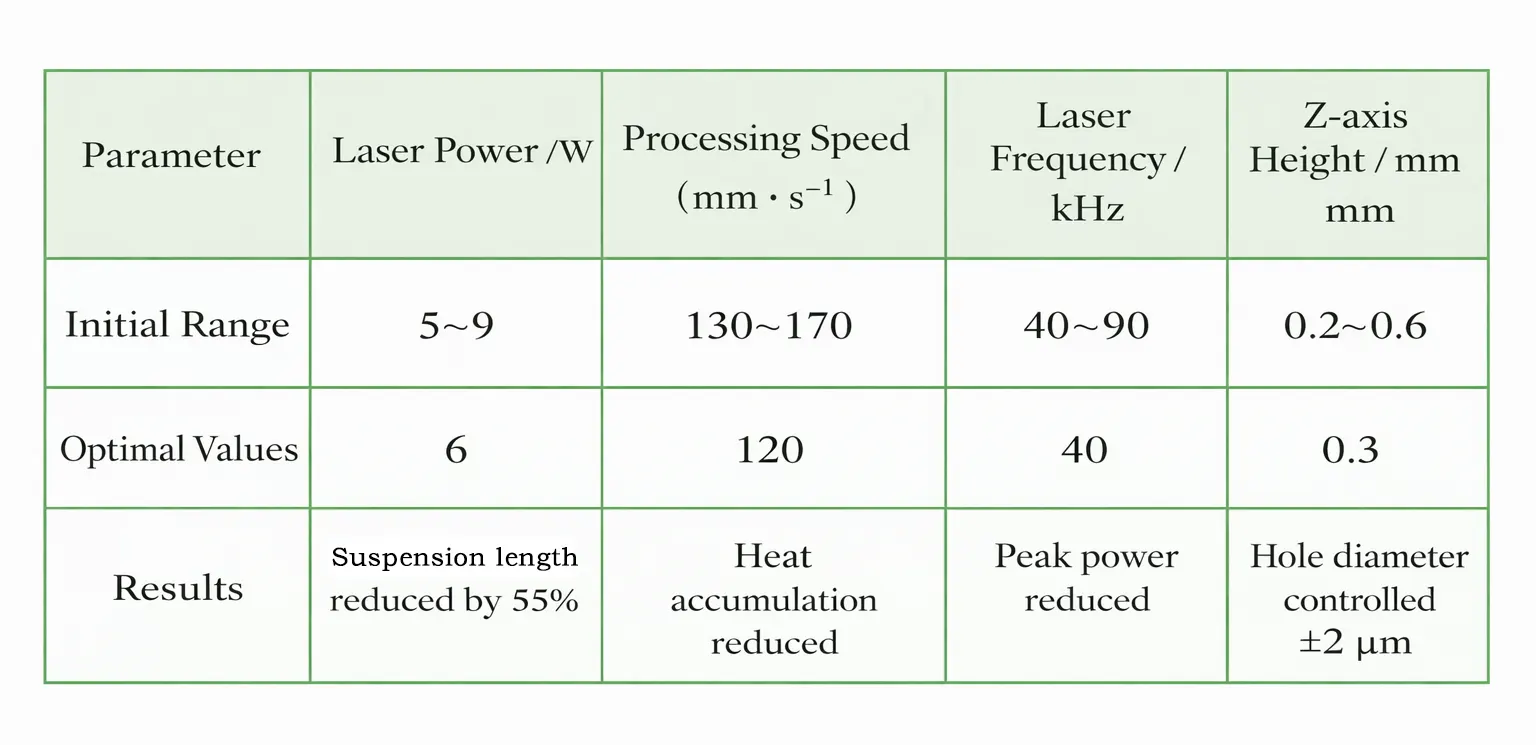
To address drilling precision, UV laser cutting can replace mechanical drilling, with parameters optimized through orthogonal experiments. Experimental data and results are shown in Table 2.
An efficient cooling system dissipates heat generated during drilling promptly, preventing material overheating and deformation.
Simultaneously, effective chip removal measures prevent chip accumulation that could compromise drilling quality.
Equipping drilling equipment with specialized cooling and chip removal devices ensures stable drilling operations and enhances drilling quality.
Optimization of Copper Plating Process
Advanced electroplating equipment forms the foundation for enhancing copper plating quality.
Vertical continuous plating lines offer advantages of excellent copper plating uniformity and high production efficiency.
Through specialized design, these lines ensure uniform flow of the plating solution across the circuit board surface.
This reduces variations in copper plating thickness caused by uneven solution distribution, effectively improving overall plating quality.
Adding specific additives and adjusting their proportions can effectively improve copper ion deposition behavior.
For instance, certain additives enable copper ions to deposit more uniformly on the circuit board surface under the influence of an electric field, reducing thickness variations caused by uneven electric field distribution and thereby enhancing plating uniformity.
The introduction of an online monitoring system provides real-time assurance for plating quality.
This system monitors key parameters during copper plating in real time, such as plating thickness and current density.
Should any parameter deviate from specifications, the system triggers immediate alerts, allowing operators to swiftly adjust settings.
This ensures every circuit board meets plating quality standards, minimizing product scrap caused by plating defects.
Optimization of Circuit Fabrication Processes
Optimizing circuit fabrication processes is a critical step in enhancing the performance of HDI circuit boards.
The application of high-precision photolithography technology significantly improves etching accuracy.
Advanced photolithography enables the transfer of finer circuit patterns and enhances resolution, effectively reducing burrs at circuit edges while minimizing deviations.
This results in more precise etched circuits with spacing that better meets design requirements, thereby lowering the risk of circuit shorts.
Appropriate etching solution formulations and parameters ensure uniform, stable etching processes, preventing over-etching or under-etching to guarantee circuit integrity and accuracy.
Enhanced quality inspection serves as a safeguard for timely issue detection and correction.
During etching, multiple inspection stages are implemented using automated optical inspection equipment for real-time circuit monitoring.
Upon identifying issues such as short circuits, open circuits, or insufficient etching precision, immediate corrective actions are taken to prevent defective products from advancing to subsequent processes.
This approach enhances overall production efficiency and product quality.
Conclusion
This paper enhances HDI circuit board manufacturing quality through three core optimization strategies:
① Drilling Process. Laser drilling technology, coupled with upgraded cooling and chip removal systems, effectively resolves rough hole wall fusion issues while significantly improving hole diameter precision.
② Plating Process. Utilizing vertical continuous plating line equipment, combined with precise control of plating solution composition, improves copper thickness uniformity within holes and reduces circuit performance risks.
③ Circuit Process. Innovative use of reverse copper foil and micro-etching solutions, through optimized photolithography parameters and in-line detection, successfully suppresses circuit performance risks.
Precise control of plating solution composition, improves copper thickness uniformity within holes and reduces circuit performance risks.
④ Circuit Process. Innovative use of reverse copper foil and micro-etching solutions, combined with optimized photolithography parameters and in-line inspection, successfully suppresses etching residues and circuit shorts, providing technical assurance for high-reliability electronic devices.
Future research should further explore enhancing laser drilling efficiency and the intelligent application of in-line monitoring systems for plating solutions.