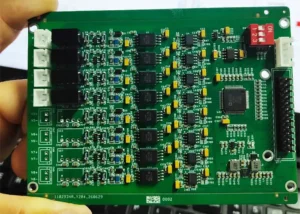
With the trend toward smarter and more integrated electronic products, a wide range of BGAs, fine-pitch components, and ultra-small devices are now in widespread use, and SMT technology has become the mainstream process for electronic assembly.
According to statistics from the International Electronics Manufacturing Association (IPC), more than 80% of electronic components worldwide rely on SMT production;
however, the defect rate in this process generally ranges from 2% to 5%, and for some complex products, it can even exceed 8%.
Defects arise not only from equipment precision or operator error but also, more fundamentally, from the lack of a unified standardization system.
From design to inspection, key elements such as process parameters, material specifications, and operational procedures lack clear technical specifications and constraints, making it difficult to trace and control quality fluctuations.
Therefore, using standardization as a starting point to systematically analyze the causes of SMT defects and propose improvement strategies is of great significance for enhancing the quality of electronic manufacturing.
Analysis of the Relationship Between SMT Manufacturing Defects and Standardization
Standardization is a management approach that establishes uniform technical specifications for production factors (people, machines, materials, methods, and environment) to ensure process controllability and predictable outcomes.
The essence of SMT defects lies in the inadequate implementation of standardization or deficiencies in the standardization system.
By referencing international standards such as IPC-A-610 and IPC-7525, the relationship between SMT defects and deficiencies in standardization can be summarized, as shown in Table 1.
| Defect Type | Manifestation of Standardization Gaps |
|---|---|
| Poor Solderability | Lack of clear standards for solder paste printing thickness; excessively wide allowable ranges for reflow temperature profiles; unclear solderability standards for pads |
| Component Misalignment | Missing standards for placement machine positioning accuracy; undefined tolerance matching between components and pads; lack of standard criteria for visual inspection systems |
| Tombstoning / Bridging | Unreasonable component layout standards; lack of standardization in stencil aperture design; mismatch in peak temperature standards of reflow profiles |
| Missing / Multiple Placement | Absence of standard parameters for placement process verification; missing standards for material anti-misidentification; lack of key parameters in first article inspection standards |
Table 1. Summary of the Relationship Between SMT Defects and Standardization Gaps
Causes of Deficiencies and Defects Due to the Lack of Standardization
-
Lagging DFM Standardization
The lack of standardization in Design for Manufacturability (DFM) during the design phase is the “primary source” of SMT defects.
Currently, most companies have not established unified DFM design specifications, and the matching rules between pads and stencils rely solely on empirical judgment.
For example, there are no clear constraints regarding the compatibility between pad dimensions and component leads.
Pad contours on PCBs from different batches may deviate due to design oversights, leading to unstable solder paste printing volumes and directly causing cold solder joints or insufficient solder issues;
There are no standardized requirements for the selection of stencil aperture shapes (such as square versus oval) or the proportion of aperture area.
Some designs even overlook the optimization benefits of “hourglass-shaped” apertures for solder paste dispensing efficiency, making it easy for components to be missed due to insufficient filling or residual paste.
Ambiguous component placement rules further amplify these risks: no minimum safe distance is specified between adjacent pads on high-density integrated circuits, making it easy for solder paste on adjacent pads to bridge due to thermal expansion during reflow soldering.
-
Vague Standards for Materials and Consumables
Material standardization is the “foundation” of consistency in SMT processes, but vague standards for materials and consumables directly lead to frequent defects.
As a critical consumable, solder paste lacks uniform benchmarks for alloy compositions (such as differences between lead-free and leaded solder) and process temperature windows across different manufacturers.
Storage conditions are only vaguely labeled as “room temperature and dry,” without specifying temperature and humidity ranges or the required acclimatization time, causing the solder paste’s activity to fluctuate with changes in the storage environment.
For example, some batches exhibit insufficient pad wetting due to moisture absorption or reduced activity, leading to cold solder joints; while in other batches, deviations in alloy ratios and shifts in melting points result in incomplete soldering.
Standardized quality control for components is lax; key indicators such as lead coplanarity (e.g., degree of warping) and solder ball oxidation status (e.g., thickness of the surface oxide layer) are not included in incoming inspection standards.
During placement, poor contact between components and pads directly leads to open circuits or abnormal contact resistance.
-
Inconsistencies Between Parameters and Maintenance Standards
Loose enforcement of equipment parameters and maintenance standards acts as an “amplifier” for fluctuations in the SMT process.
Core parameters of the printer (such as squeegee pressure and stencil separation speed) lack dynamic adjustment standards based on solder paste characteristics and are set solely based on technicians’ experience.
For example, if the pressure is too low, the solder paste cannot fully fill the bottom of the stencil apertures, resulting in insufficient paste deposition on the pads, voids, or missing paste, which affects soldering reliability.
If the pressure is too high, the solder paste is excessively squeezed, leading to thinner paste layers, and in severe cases, causing solder paste to bridge adjacent pads (collapse) or scratching the stencil surface, thereby reducing product yield;
Conversely, if the separation speed is too fast, it causes solder paste to form sharp points, leading to component misalignment during placement.
The calibration standards for the placement machine are vague; key indicators such as the vacuum threshold for the nozzle and the repeatability accuracy of the vision system lack clear calibration cycles and evaluation methods.
As a result, issues such as nozzle air leaks or lens misalignment are not detected on time, leading to higher component placement deviation rates and a greater risk of solder bridging in subsequent soldering processes.
The temperature zone control standards for reflow ovens are too general.
Failure to conduct oven temperature tests during product changeovers and improper conveyor belt speed settings result in uneven heating of the PCB.
This causes solder pads to fail to reach the melting point, leading to cold solder joints or overheating that triggers solder oxidation, resulting in bridging or solder splatter.
The lack of standardization in equipment parameters and maintenance makes it difficult to trace performance fluctuations, and process stability cannot be guaranteed.
-
Loose Operational and Parameter Standards
Loose operational and parameter standards in the manufacturing process are a key driver of SMT defect proliferation.
Reflow profile settings lack targeted justification; the heating rate in the preheating zone and the dwell time in the hold zone are based solely on equipment manuals, without optimization based on solder alloy characteristics and component temperature tolerance.
For example, excessive heating rates can cause thermal shock cracking in components; insufficient dwell time prevents adequate flux evaporation, leading to poor solder paste wetting and resulting in cold solder joints.
Standards for placement pressure are vague, with no graded control strategies specified for thin components (such as 01005).
Excessive pressure can crush the solder paste, causing component displacement, while insufficient pressure results in poor contact between the component and the solder paste, leading to component detachment during subsequent soldering.
-
Outdated Methods and Criteria
Outdated methods and criteria at the inspection stage represent a “breach of the last line of defense” in SMT quality control. SPI/AOI inspection standards are inconsistent; acceptable tolerances for solder paste thickness and component misalignment thresholds vary depending on equipment brands or company requirements.
Differences in inspection criteria across various devices lead to missed defects.
For example, some components with excessive misalignment go undetected, leading to subsequent solder bridging; PCBs with insufficient solder paste thickness are not identified, resulting in cold solder joints.
X-ray inspection criteria are vague; acceptance standards for BGA ball void rates and misalignment have not been aligned with international specifications.
Internal defects (such as excessive voids or ball misalignment) are not intercepted promptly, leading to reliability issues once the products reach the client.
More seriously, there is a lack of defect classification and traceability standards.
Defects such as cold solder joints and bridging lack unified coding rules, responsibility for these issues is unclear, corrective measures lack specificity, and similar problems recur repeatedly.
Standardized Strategies for Reducing SMT Defects
-
Establishing Standardized DFM Guidelines
Standardizing Design for Manufacturing (DFM) during the design phase serves as the first line of defense against SMT defects.
Currently, many companies face issues such as vague design rules and a lack of simulation verification; therefore, it is essential to establish a standardized system from the outset.
In the pad and stencil design phase, clear rules for pad sizing should be established for different components (e.g., 0201 resistors, QFN packages) to prevent inconsistent solder paste volume caused by contour deviations.
Stencil aperture shapes (e.g., “hourglass” for QFNs) and aperture area ratios should be standardized to ensure efficient solder paste dispensing and reduce the risk of missed components.
Component placement rules must be refined.
For example, specify the minimum thermal clearance around high-density ICs to prevent solder paste bridging between adjacent pads during reflow; explicitly prohibit the placement of test points beneath BGAs to reduce the probability of ball cracking caused by thermal stress.
Simulation verification standards must be simultaneously refined by standardizing input parameters (e.g., solder melting point, component thermal expansion coefficient) and output criteria (e.g., bridging risk thresholds).
This ensures that process simulation results provide reliable guidance for production, enabling early warning of design defects and preventing batch issues from entering the production phase.
Through DFM standardization, the path to defect generation is cut off at the design source, achieving the quality objective of “design-in-correct.”
-
Strengthening Standardized Control of Materials and Consumables
Material standardization is the cornerstone of SMT process consistency.
A control system must be established covering three key areas: solder paste, components, and PCBs.
Solder Paste Quality Control
As a critical consumable, solder paste requires clearly defined alloy composition, process temperature windows, and storage conditions to prevent reduced activity and insufficient wetting caused by composition deviations or improper storage;
Establish incoming material inspection standards to screen for qualified batches through viscosity testing, activity testing, and solderability verification.
Component quality control requires the refinement of key indicators, such as lead coplanarity (degree of warpage) and solder ball oxidation status (surface oxide layer thickness).
For ICs with a high number of pins, add X-ray internal void detection to intercept potential contact defects.
PCB Incoming Material Standards
PCB incoming material standards must specify surface treatment parameters (e.g., OSP coating characteristics, ENIG nickel layer composition).
Solderability must be verified through wetting equilibrium tests, and non-compliant PCBs must be rejected.
Process Stability and Summary
Standardizing the entire material process reduces performance fluctuations between batches, providing a reliable foundation for stable SMT processes.
Strengthen standardized control of materials and consumables as shown in Table 2.
| Control Object | Key Indicators / Parameters | Standardization Requirements | Inspection / Verification Methods |
|---|---|---|---|
| Solder Paste | Alloy Composition | Clearly define specific alloy ratios (e.g., Sn96.5Ag3.0Cu0.5) to avoid composition deviation | Elemental analysis instrument testing |
| Solder Paste | Process Temperature Window | Define peak temperature range (e.g., 245–255 °C) and solidification temperature range | Temperature profile tester verification |
| Solder Paste | Storage Conditions | Define storage temperature range (e.g., 2–10 °C refrigeration) and time limits (e.g., 4 h at room temperature + 12 h usable time) | MES system monitoring |
| Solder Paste | Internal Quality | Increase BGA powder inspection via X-ray; set acceptable void ratio thresholds | X-ray inspection equipment |
| Solder Paste | Appearance Quality | Define standards for deformation, oxidation, and foreign particle detection | Visual inspection + magnification tools |
| PCB | Surface Treatment Parameters | Define OSP film thickness (0.2–0.5 μm) and ENIG gold layer content (6%–10%) | Film thickness tester, composition analysis |
| PCB | Solderability Verification | Use wetting balance testing to define wetting time thresholds (e.g., ≤ 3 s) | Wetting balance tester |
| PCB | Dimensional Accuracy | Define pad position and dimensional tolerances to ensure component matching | AOI inspection, coordinate measurement |
Table 2. Comparison Table for Standardized Control of Materials and Auxiliary Materials
-
Establishing a Standardized System for Parameters and Maintenance
Standardizing equipment parameters and maintenance is essential for ensuring process stability.
For printing machines, dynamic adjustment standards must be established for key parameters such as squeegee pressure and stencil separation speed.
These standards should be optimized in conjunction with the viscosity characteristics of the solder paste to improve printing results and prevent issues such as uneven solder paste thickness and tip formation caused by excessive pressure or overly rapid separation.
For pick-and-place machines, calibration cycles and evaluation methods for nozzle vacuum levels and vision positioning accuracy must be standardized.
Nozzles should be cleaned regularly, and lens accuracy calibrated to minimize component placement deviations.
Reflow ovens must refine control standards for temperature uniformity across zones and conveyor belt speed.
Regular calibration ensures consistent heating across all areas, preventing cold solder joints or bridging caused by temperature fluctuations.
Additionally, equipment condition monitoring standards should be implemented.
By using sensors to collect real-time data on temperature, pressure, and other parameters and setting thresholds for anomaly alerts, equipment performance can be maintained.
The implementation of a standardized equipment management system can significantly reduce process deviations caused by equipment fluctuations and ensure production consistency.
-
Refining Standardization Processes for Operations and Parameters
Standardizing operations and parameters at the process level is key to process control. Reflow profile settings must take into account the characteristics of the solder alloy and the temperature tolerance of the components.
Critical parameters—such as the heating rate in the preheat zone, dwell time in the hold zone, and peak temperature—must be clearly defined.
Consistency should be verified using a oven temperature tester to prevent component damage or poor wetting caused by excessive heating rates or insufficient dwell time.
The placement process requires the establishment of differentiated standards for different component types (such as thin 01005 components and large-sized PCBs).
This involves reducing placement pressure to prevent solder paste collapse and adding intermediate supports to prevent PCB warping.
First-piece inspection must cover multi-dimensional parameters such as solder paste thickness, component positioning, and pad wettability, using SPI, AOI, and wettability balance tests to proactively identify batch defects.
Additionally, visual SOP documents should be developed to clearly define operational steps and quality criteria for critical stages such as stencil replacement and nozzle cleaning, thereby reducing human error.
Process standardization, achieved through detailed procedures and clear standards, embeds quality control throughout the entire production process, effectively preventing the spread of defects.
-
Improve the Standardization System for Methods and Criteria
Standardization of inspection methods serves as the final line of defense in quality control.
It is necessary to unify the criteria for inspection methods such as SPI, AOI, and X-RAY, and clearly define acceptance criteria for solder paste thickness deviations, component offset thresholds, BGA void rates, and offset amounts.
This ensures comparability of inspection results across different equipment and reduces missed and false detections.
Establish defect classification and traceability standards, formulate unified coding rules (such as dedicated codes for cold solder joints and bridging), clarify responsible departments (design, materials, equipment), and define rectification procedures.
Utilize the MES system to enable traceability of defect data and improve the efficiency of issue resolution.
Introduce intelligent inspection standards by training defect-recognition models using machine-learning algorithms and setting acceptance thresholds for false-positive and false-negative rates to improve inspection efficiency and accuracy.
Through standardized methods, clear traceability, and intelligent upgrades, inspection standardization fortifies the final line of defense for quality, ensuring defects are “detected early, intercepted early, and corrected early.”
Conclusion
The root causes of defects in SMT manufacturing lie in the absence of a standardized system and deviations in its implementation.
A comprehensive standardized system is established covering design, materials, equipment, processes, and inspection.
The system clearly defines technical specifications for each stage.
The system also defines operational criteria for each stage. This approach effectively prevents defects.
This approach enhances process controllability. In the future, SMT manufacturing will continue to evolve with the adoption of digital standards such as Model-Based Definition (MBD).
SMT manufacturing will also advance through alignment with international standards such as IPC-2581.
SMT manufacturing will further develop through the application of AI-driven intelligent standards.
These developments will drive SMT manufacturing toward greater standardization and intelligence. These improvements will provide a solid foundation for the high-quality production of electronic products.