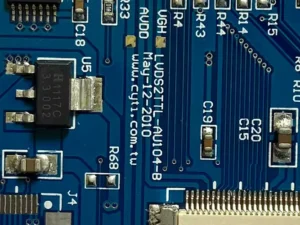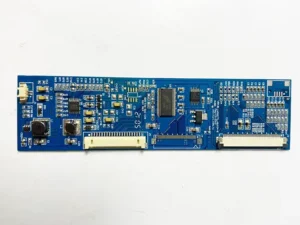
PCB Slot holes—also known as oblong, oval, or irregular holes—are widely used for connectors, positioning features, and mechanical retention in printed circuit boards.
Compared with circular drilled holes, slots are more sensitive to positional deviation, dimensional tolerance stack-up, and hole wall quality due to their geometry and the routing process required.
This article consolidates design rules, manufacturing physics, and process controls with quantitative data to help engineers achieve stable, repeatable slot quality in volume production.
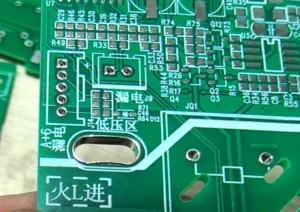
Why Slot Holes Are More Challenging Than Round Holes
Circular holes benefit from self-centering drill mechanics and uniform cutting engagement.
In contrast, slots are produced either by overlapping drilling or, more commonly, by CNC routing.
The asymmetric cutting forces during routing, combined with tool deflection and laminate anisotropy, make slots prone to skew, taper, rough walls, and exit tear-out.
These risks increase with decreasing slot width, increasing board thickness, and higher glass content or ceramic-filled laminates.
Design Rules with Quantitative Rationale
1. Slot Width, Length, and Aspect Ratio
From a tool rigidity and chip evacuation standpoint, most PCB manufacturers recommend a minimum finished slot width of 0.8 mm.
Although 0.5 mm routers exist, practical capability depends on board thickness and laminate type.
For standard FR-4 up to 1.6 mm thick, 0.8 mm ensures adequate flute space and stiffness.Aspect ratio is critical.
When the slot length-to-width ratio is below 2:1, the router experiences frequent entry/exit transients over a very short distance, increasing vibration and positional instability.
Empirical factory data shows that dimensional CpK drops by 20–30% for slots with L/W < 2 compared with L/W ≥ 3 under identical parameters.
Clearance to the board edge must be sufficient to prevent edge breakout and fiber tear.
A conservative rule is ≥1.0 mm from slot edge to board edge, or ≥1.6× board thickness, whichever is larger.
This aligns with IPC-2221 recommendations for mechanical feature spacing.
2. Shape, Corners, and Stress Distribution
Sharp internal corners concentrate stress and are difficult to machine cleanly.
Designing slot ends as arcs with a radius equal to or greater than the router radius reduces tool shock and laminate delamination risk.
Finite element analyses and fracture studies on glass-epoxy composites show that stress concentration factors at sharp internal corners can be 2–3× higher than at radiused corners.
Slots placed near dense routing areas or fine lines are susceptible to collateral damage from vibration and tool runout.
A keep-out of ≥0.25–0.30 mm copper-to-slot edge is widely adopted to prevent copper lift and smear.
Symmetrical placement of multiple slots helps balance internal stresses released during routing and cooling.
Asymmetrical layouts are more prone to global warpage and local skew, especially on thin cores.
3. Laminate Anisotropy and Fiber Direction
Woven glass fabric exhibits anisotropic mechanical properties.
The warp direction (machine direction) is stiffer and more dimensionally stable than the weft.
Aligning the long axis of a slot with the warp direction reduces deflection and dimensional drift.
Tests reported by laminate suppliers indicate 5–10% lower dimensional change in features aligned with warp versus weft after thermal cycling.
For multilayer boards, if a slot cuts through internal copper, the inner copper clearance must be sufficient to avoid copper “curling” or lifting.
A typical minimum is ≥0.30 mm from inner copper edge to slot wall.
4. Plating Requirements and Compensation
Slots used purely for mechanical location should be defined as NPTH (Non-Plated Through Hole) to avoid unnecessary process steps and tolerance risk.
If plating is required, designers must account for copper thickness buildup.
With typical through-hole copper of 20–25 µm per side, the finished slot width can reduce by 0.04–0.05 mm.
Therefore, manufacturers often recommend design oversize of 0.10–0.20 mm depending on plating thickness and capability.
Manufacturing Methods and Their Implications
1. Drilling by Overlap vs. CNC Routing
For cost reasons, some factories create short slots by overlapping drilled holes.
This is acceptable when L/W ≥ 2 and tolerances are loose. However, positional error accumulates across each drill hit, and the resulting wall is scalloped.
For precision connectors and tight tolerances, CNC routing in a single continuous path is the preferred method.
It provides smoother walls, better positional accuracy, and consistent geometry.
2. Tool Selection and Rigidity
High-stiffness carbide routers with optimized flute geometry are essential.
Compared with HSS tools, carbide provides 2–3× higher modulus and wear resistance, reducing deflection and chatter.
Nano-coatings (e.g., DLC, TiAlN) lower friction and resin adhesion, improving wall finish.
3. Multi-Pass (Step-Down) Routing for Thick Boards
For boards thicker than 2.0 mm, single-pass routing significantly increases lateral force and tool deflection.
Dividing the cut into two or three depth passes can reduce peak cutting force by 30–40%, improving straightness and reducing exit tear.
Fixturing, Datum Control, and Entry Strategy
Accurate slot geometry depends on stable workholding. Vacuum tables or high-tack adhesive films minimize vibration.
In precision applications, adding dedicated tooling holes near the slot improves datum repeatability.
Entry point strategy matters. Plunging directly into the finished wall can cause fiber breakout.
Programming the plunge point outside the slot boundary or at the center of the end radius reduces entrance damage.
Data Preparation and CAM Communication
Slots must be clearly defined in Gerber or ODB++ data as routed features, not as a series of drills.
Ambiguity leads to incorrect process selection. Many factories require explicit layer designation and a routing layer outline.
When the L/W ratio is marginal (<2), adding stress relief holes at both ends distributes cutting forces and reduces skew.
Internal trials have shown up to 40% reduction in slot deviation with stress relief holes in marginal designs.
Typical Capability and Tolerance Data
Parameter | Typical Capability (FR-4, 1.6 mm) | Notes |
Minimum routed slot width | 0.8 mm | 0.5 mm possible with restrictions |
Slot width tolerance | ±0.05 mm | Tighter with special control |
Slot position tolerance | ±0.075 mm | Depends on panel size and datum |
Minimum copper to slot edge | 0.25–0.30 mm | Inner layers ≥0.30 mm |
Board edge to slot edge | ≥1.0 mm or ≥1.6× thickness | To avoid breakout |
Plating build-up | 0.04–0.05 mm total | 20–25 µm per side |
Values compiled from IPC guidelines and major PCB fabricator capability matrices.
Common Failure Modes and Root Causes
Defect | Primary Cause | Contributing Factors |
Slot skew / misalignment | Tool deflection, poor fixturing | Thin boards, long slots |
Rough walls / resin smear | Excessive heat, dull tool | High Tg, ceramic fill |
Exit burr / fiber tear | Insufficient backup support | Worn backup board |
Copper lift at inner layers | Insufficient clearance | High copper density |
Dimension undersize after plating | No compensation | Heavy copper plate |
Practical Process Controls
Factories achieving high slot yield typically combine the following:
- Parameter optimization: Lower feed per tooth for narrow slots to control lateral force.
- Fresh backup material: Especially for bottom-side exit quality.
- Tool life management: Replacing routers before flank wear exceeds ~20–25 µm.
- In-process inspection: CMM or vision measurement of slot width and position on first article and bottom panels.
- Material-specific recipes: Separate programs for high-Tg and filled laminates.
Conclusion
Slot holes impose significantly higher demands on both design discipline and manufacturing control than standard round holes.
Width, aspect ratio, fiber direction, copper clearance, and plating requirements must be defined with machining physics in mind.
On the production side, CNC routing with rigid carbide tools, multi-pass strategies for thick boards, disciplined fixturing, and explicit CAM communication are essential.
When these factors are integrated, slot skew, roughness, and dimensional drift can be reduced to levels comparable with drilled features, enabling reliable assembly of connectors and mechanical components.
References
1. IPC-2221, Generic Standard on Printed Board Design, IPC Association Connecting Electronics Industries.
2. IPC-6012, Qualification and Performance Specification for Rigid Printed Boards, IPC.
3. Schmoll Maschinen, Routing and Drilling Technology in PCB Manufacturing, Technical White Paper.
4. Isola Group, FR-4 Laminate Processing Guidelines, Technical Datasheets.
5. Shengyi Technology, S1000 Series Laminate Technical Data and Processing Guide.
6. F. McGeough, Advanced Methods of Machining, Chapman & Hall – sections on routing and composite machining.
7. Weinert et al., “Machining of Fibre Reinforced Plastics,” CIRP Annals – Manufacturing Technology.