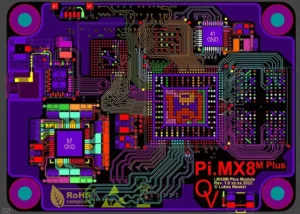
SMT, or Surface Mount Technology, is a new-generation electronic assembly technology that evolved from hybrid integrated circuit technology.
SMT assembly technology is widely used and has greatly contributed to the miniaturization and multifunctionality of electronic products.
With the rapid development of electronic products, the design of SMT assembly processes involves many aspects and comes with numerous specific requirements.
SMT manufacturers are also placing increasingly higher demands on quality, particularly regarding the quality of the assembly process itself.
Strictly adhering to electronic manufacturing requirements during production will inevitably improve manufacturing quality.
So, how exactly should this be done? Please see the following.
PCB and IC Reheating
1. If the PCB is less than three months old and shows no signs of moisture, reheating is not required.
If it is older than three months, the reheating time is 4 hours.
2. Temperature: 80–100 degrees; IC: BGA package.
Sensitive components have specific temperature requirements for their operating environment, which must be between 18 and 28 degrees, with humidity between 40% and 60%.
Humidity should be slightly reduced during storage, while the temperature remains the same.
3. Bulk ICs that have been in storage for one month require 24 hours of baking;
Brand-new bulk ICs require at least 8 hours of baking; used or salvaged ICs require 3 days of baking at a temperature of 100–110°C.
ICs in QFP, SOP, and other packages that are still in their original vacuum packaging do not require baking;
However, bulk ICs require at least 8 hours of baking at a temperature of 100–110°C.
Surface Mount
- Solder Paste Process
- Red Glue Process
- Leaded Process
- Lead-Free Process
Component Identification Markings
The identification markings—including type, model, nominal value, and polarity—for components at each assembly location must comply with the requirements specified in the product’s assembly drawing and bill of materials (BOM) (specifying whether ICs requiring programming have been programmed).
All mounted components must be intact and undamaged.
Solder Paste Application Requirements
At least half the thickness of the solder terminals or leads of the components to be mounted must be immersed in the solder paste.
For general components, the extruded length of solder paste during placement should be less than 0.2 mm; for fine-pitch components, it should be less than 0.1 mm.
Component Tolerance Ranges
The terminals or leads of components must be aligned with and centered on the pad pattern.
Due to the self-alignment effect during the reflow soldering process, a certain degree of deviation in component placement is permitted.
The allowable tolerance ranges are as follows:
1. Rectangular components: At least half the width of the component’s terminals must be on the pad in the width direction; in the length direction, the component’s terminals must overlap the pad;
In the case of rotational deviation, at least half the width of the component’s solder terminals must be on the pad.
2. Small Outline Transistors (SOT): Deviations in X, Y, and T (rotation angle) are permitted, but the leads (including the toe and heel) must be entirely on the pad.
3. Small Outline Integrated Circuits (SOIC): Mounting deviations in X, Y, and T (rotation angle) are permitted, but at least 3/4 of the pin width (including the toe and heel) must be on the pad.
4. Quad Flat Package (QFP) and Ultra-Small Package Devices: Ensure that 3/4 of the lead width is on the pad;
Minor mounting deviations in X, Y, and T (rotation angle) are permitted.
The tip of the lead may extend slightly beyond the pad, but 3/4 of the lead length must be on the pad, and the heel of the lead must also be on the pad.
Standard Production Control Guidelines
Standard surface-mount components must comply with the IPC-310 and IPC-610 standards.
1. Incoming Materials: Moisture-proof bags must contain desiccant packets and corresponding humidity cards.
The exterior of the moisture-proof bags must also bear relevant labels, including those indicating improper packaging or requiring confirmation and handling by authorized personnel.
2. Storage: If the temperature and humidity sensors for SMT components are unopened, store them according to the instructions.
If opened, they must be returned to the warehouse, baked, repackaged, and vacuum-sealed before use in SMT assembly.
If opened materials are not to be used immediately, they must be stored in a low-temperature oven and must not be left out at will.
3. Operations: During production, processing personnel must strictly inspect component quality and fill out the humidity indicator cards.
This information must also be recorded when changing materials.
In the event of a return to the warehouse, packaging and storage must be carried out in accordance with regulations.
4. Dehumidification: Set the baking time and conditions based on the SMT assembly grade, environmental conditions, humidity levels, and the time since the package was opened.
Precautions for the SMT Process
1. When unpacking components on the SMT production line, operators must wear anti-static wrist straps, gloves, and wristbands.
Vacuum packaging may only be opened after proper electrostatic protection measures have been implemented.
2. If moisture-sensitive components are received in bulk, they must be inspected according to the “Moisture-Sensitive Component Control Label” to verify compliance.
If compliant, they should be used first; if non-compliant, they should be handled according to standard procedures.
3. After opening the packaging, ensure that the exposure time before reflow soldering is kept to a minimum.
4. Non-conforming components must be returned directly to the warehouse and may not be used in SMT contract manufacturing or material supply.
5. The board surface must be thoroughly cleaned; no visible solder balls or solder residue should be present.
Test Scope
Check whether the indicator light is on, whether the scanner is searching for an IP address, whether the image display is normal, whether the motor is rotating, test the audio, test the voice monitoring and intercom functions, and verify that both the device and the computer produce sound.
Sampling Inspection
A small number of products (samples) are randomly selected from a batch for inspection, based on which a determination is made as to whether the batch meets the required standards, and statistical analysis is conducted.
Conclusion
SMT assembly quality depends on strict process control throughout every stage, from PCB and IC reheating to solder paste application, component placement, storage management, and final inspection.
By following standardized manufacturing requirements, controlling moisture and temperature conditions, ensuring accurate component mounting, and maintaining proper production procedures, manufacturers can significantly reduce defects and improve assembly reliability.
As electronic products continue to become smaller and more complex, advanced SMT process management is essential for achieving high-quality, efficient, and stable electronic manufacturing.
Careful attention to every detail in the SMT process helps ensure better product performance, longer service life, and consistent production results.