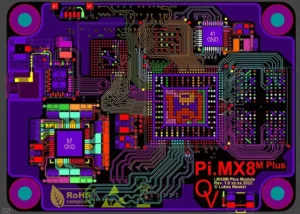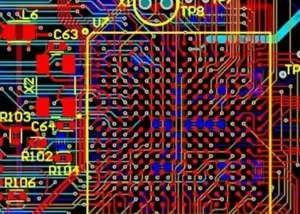
Mastering electronic component inspection techniques is a key factor in circuit fault detection, and the final step in circuit fault detection is to confirm whether a component actually has a defect, which requires the use of inspection techniques to achieve.
History of PCB Testing Methods
In the PCB manufacturing process, etching is the most critical step, which involves using chemicals or chemical solutions to remove the copper remaining outside the designed circuit.
In this process, factors such as chemical dosage, environmental conditions (temperature), water flow rate, and etching time threaten production quality, and can even lead to issues such as short circuits, open circuits, line width defects, residual copper, and pinholes.
Inspectors typically inspect PCBs using visual inspection, electrical testing, and AOI methods.
Before the 1970s, human inspectors mostly performed PCB testing with magnifying glasses, which slowed inspection speed and increased missed defects, while also harming inspectors’ vision and health.
The basic principle of electrical testing is to select a test fixture and appropriate probe configuration based on the computer data from the PCB schematic.
During testing, an operator presses a probe against the test points on the PCB surface, then applies power to measure the continuity of each contact point, reporting any short circuits or open circuits.
This method only detects short circuits and open circuits, while it fails to detect other defects such as gaps, pinholes, and residual copper; it also requires high production costs for test fixtures and does not suit small-batch production.
Higher density and more compact PCB designs also impact electrical testing.
As circuit boards become increasingly dense, electrical testing requires an expanded number of test points, leading to an increase in the development of test programs and the production of test fixtures.
Developing these test programs and fixtures typically takes several weeks or even over a month, while the frequency of testing errors and retests also increases accordingly.
Automated Optical Inspection (AOI) Technology for PCBs
How Automated Optical Inspection Works
AOI measures the image quality of a PCB surface, including surface defects, open circuits, and short circuits.
Manufacturers primarily use it for quality inspection of finished products during the manufacturing process, and it plays a key role in high-precision single-layer printed circuit boards, especially in various PCB manufacturing processes.
The testing system integrates optical sensors, precision mechanics, recognition algorithms, and electronic technology.
It uses camera or laser technology to automatically capture images of the PCB.
After collecting the images, the system sends them to a computer for processing and compares them against standard data in the database.
When the system detects issues on the PCB, an automatic display or labeling system alerts the operator or marks the problem, enabling maintenance technicians to perform repairs.
Image Acquisition
Image quality is critical to AOI; the quality of the acquired images directly affects the final test results.
Based on an analysis of the image acquisition components used, current AOI systems primarily include: high-precision line-scan CCDs; laser technology as the illumination source; or photomultiplier tubes (PMTs) as photodetectors for image acquisition.
Signal processing primarily involves converting the electrical signals generated by photodetectors (CCD or PMT) regarding PCB data into binary information recognizable by a computer.
First, the system uses an analog-to-digital conversion method to convert the analog signal into a grayscale digital signal.
Then, the system leverages the differences in grayscale values between the PCB substrate and copper to generate a two-dimensional grayscale image.
Next, the system applies a thresholding method to convert image areas exceeding a specified grayscale threshold into copper images, while it converts areas equal to or below the threshold into substrate images.
The system selects the threshold based on the material’s color and typically sets it at 60 to 110 times the average grayscale value.
Finally, the system obtains a binary (0,1) result based on the PCB data.
Image Processing Methods
1. Image Feature Extraction
PCB analyzes transformed two-dimensional images to identify existing issues.
There are two main categories of commonly used analysis methods.
The vector analysis method is an image location search technique that calculates eight rays extending outward from the center along vertical, horizontal, and diagonal directions.
It identifies and isolates key features from the image, then measures them, including shape, size, angle, and position.
However, because this method is highly directional and the gaps between the rays often create measurement blind spots, it has a high rate of missed detection and is now rarely used.
The other category is mathematical morphological analysis, which offers the following advantages: when an image is simplified to a skeleton form, the amount of image data is significantly reduced, making the recording of image characteristics more stable, reliable, and accurate, and providing greater flexibility for the development of new algorithms.
2. Image Processing Algorithms
In PCB testing, the most commonly used calculations fall into the following four categories:
① Data Analysis Category:
Analyzes the captured data, performs final screening, and filters out minor pinholes, excess copper, and holes that do not require measurement.
② Feature Measurement Category:
Performs feature extraction on the input data, records feature codes, lengths, and orientations, and compares them with standard data.
③ Topology:
Used to check for added or missing features.
④ Hole and Micro-Notch Calculations.
AOI Testing Systems
Common AOI Testing Systems
Currently, major suppliers of AOI equipment include ORBOTECH and CAMTEK from Israel, as well as LIOYDDOYLE and SCREEN from Japan.
The following section will use ORBOTECH’s INSPIRE9060 and V309 Blaser as examples to illustrate the key performance features of AOI control systems.
The INSPIRE9060 is one of the most intelligent AOI series in the world today.
It features manual board loading and unloading functions, uses color CCD pixels, and employs morphological calculation methods to perform image analysis and data processing, capable of measuring the length and distance of very small paths (approximately 75 nanometers).
The V309 Blaser management system is an AOI management system that uses laser technology to extract images.
It possesses significant testing capabilities for high-density interconnect (HDI) boards, fine-line boards, and laser-drilled boards, with a minimum resolution of 6.3 nanometers and a minimum measurable trace length/distance of approximately 50 nanometers.
Trends in AOI
1. In-line Testing
PCB manufacturers want AOI systems to be able to connect directly to etched circuit boards without the need for manual board handling, as in-line AOI testing reduces labor costs and improves quality.
2. HDI Board / Laser-Drilled Board Inspection
Since HDI boards feature very fine traces and defects are often subtle, AOI systems need to improve their ability to detect minute defects.
3. Inspection of Extra-Large Boards
Design requirements for communication backplanes are driving further development toward larger boards (greater than 1270mm × 762mm).
Although AOI can perform tasks that visual inspection cannot, there is still room for improvement in terms of reliability.
This technology relies heavily on computers and image processing technologies; if the signals provided by the raw optical images are missing, or if the image processing algorithms are not applied effectively, errors will occur.
Therefore, the development of AOI processes for high-resolution printed circuit boards will continue.
The Role of AOI (Automated Optical Inspection) in PCB Manufacturing
Automated Optical Inspection(AOI) uses cameras and image processing software to identify assembly errors, such as solder shorts, missing or misplaced components, and component disconnections, serving as a tool to provide customers with high-quality circuit boards.
AOI improves error detection compared to visual inspection, particularly as PCBs become more complex and production volumes increase.
AOI machines are widely used in PCB manufacturing, where surface-mount components have become increasingly miniaturized, enabling them to play a vital role in PCB production.
High Positioning Accuracy
An AOI (Automated Optical Inspection) system must have high sub-pixel accuracy to ensure sufficient precision, enabling it to detect minute positioning errors that could lead to PCB defects.
Improve PCB Quality and Reduce Costs
Automated Optical Inspection (AOI) can significantly improve the yield rate of PCBs, thereby reducing PCB costs.
Multiple Inspection Targets
The AOI (Automated Optical Inspection) system is not only well-suited for inspecting PCBs but also for inspecting the PCB assembly process. For PCBs, it detects issues such as short circuits, open circuits, and insufficient solder.
However, during the PCB assembly process, it also inspects component soldering quality, polarity, and values.
Programmable Lighting
In all areas of computer vision, achieving optimal lighting is a critical step for obtaining perfect results.
Given the ever-changing conditions of material processing, there is likely a light source capable of detecting a wide range of defect phenomena.
Therefore, ensuring that dynamic lighting designs provide the highest defect coverage for components and PCB configurations is essential.
As the production costs of light-emitting diodes (LEDs) have decreased, AOI testing can now incorporate highly customizable LED arrays into inspection procedures.
At the same time, AOI testing can more effectively enhance pixel resolution, making it easier to identify a wide range of defects across multiple angles and colors.
Consequently, programmable lighting is essential software for maximizing detection capabilities.
Network-Enabled Software
The key functions of any AOI system are data acquisition and retrieval.
Data can take the form of text output, image sets, databases, or a combination of multiple formats.
Collecting information is a fundamental function of most AOI equipment.
However, the process of retrieving information is often cumbersome and constrained by the configuration of the production line.
Comprehensive Flexibility
Based on demand and production capacity, AOI can perform all steps of the entire production process.
The primary reason for conducting AOI testing after reflow soldering is that these defects are the inevitable result of errors in the soldering process.
Consequently, this approach reduces costs, improves testing efficiency, and allows for timely adjustments to production or assembly parameters to ensure better quality in subsequent products.
Conclusion
In summary, to accurately and appropriately test the technical parameters of electronic components, it is necessary to select different testing methods based on the specific component.
Therefore, it is essential to be familiar with and master the correct testing methods and best practices for electronic components.